 Oudomxay – Laos, 10 November 2017
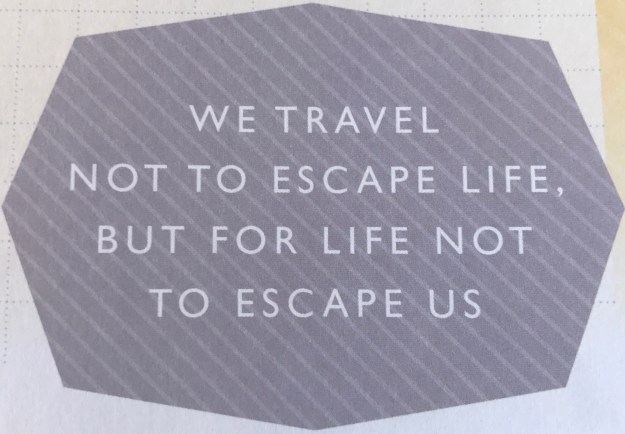
Why do we travel?
Leave a reply
Oudomxay – Laos, 10 November 2017
An intriguing piece of information I came across recently. There is a trend in the USA for naming baby girls “Malaysia”. It seems it’s a rapidly accelerating trend which started around 10 years ago, and in 2013 630 babies were given the name, in 2014 810.
Now, I think it’s a very pretty name, Malaysia, with all those fluid open vowels, that soft ‘m’ , that gentle ‘sh’ sound. But, I wonder… how will it be shortened? Lots of names seem to be, whether or not the parents intend it*. May? Lacy? Layshy? Shia (maybe not, depending on her religion).
And what if little Malaysia, at some point in her life, ends up living in – Malaysia? I remember some English friends whose daughter was (rather fashionably) named India. There was no end of confusion registering for visas and schools and the like when the family moved to Mumbai. And little India used to get quite cross when people asked her name, then thought she was telling them where she lived…
*Unless the name is so short already it gets lengthened, of course. But that’s another story….
According to novelist Pico Iyer, India is the “most chattery nation on earth”. Well, I wouldn’t like to try and judge that, but the wonderful, inventive, vibrant, use of Indian English is always a delight.
In Kolkata, for example, we saw the Victoria Memorial, which according to the taxi driver is the ‘Taj Mahal’ of the city. “Taj is Raj”, he said, neatly summarising the relationships between architecture and colonial power…

Kolkata is well known for its intellectual and literary culture. We wandered, and browsed, on College Street: “College is knowledge”, our driver sagely told us.

We’d come across this glorious Indian habit of playing with rhymes before. “I’m going shopping-whopping”, for example, or “oh, not another meeting-sheeting”. Perhaps it’s even catching: one of the TFs, faced with a group all chattering away at once, added his own, magnificent invention: ‘Will you please just stop talking -squawking!’
A piece of the world’s wisdom, specially for procrastinators:
“If not now, when?”
(Jewish Proverb)
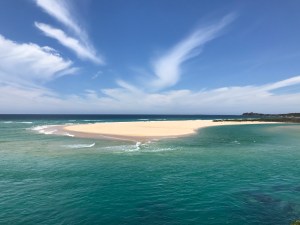
“Voyager, c’est aussi s’arrêter”*
English version: “To travel, is also to stop”…
*seen on a motorway in France
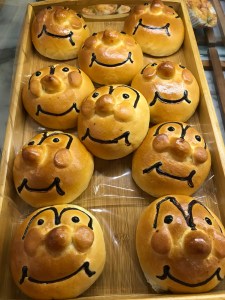
I love the Burmese proverb: “If you see someone without a smile, give him yours”.
So when I saw these in the bakery (in Kuala Lumpur), first they made me smile, then they made me think of extending the principle.
How about “If you see someone without a bun, give him yours”….?
Uluru/Ayers Rock. Hard to find the words for the sense of awe it inspires, its beauty, its significance, its unique environment. There was a dilemma, though. Should we, or shouldn’t we, climb to the top?

We read the words of the Anangu, traditional custodians of the site. And we decided not to.


And I have to admit, just in case we’d been tempted, one look at the route would probably have clinched it….

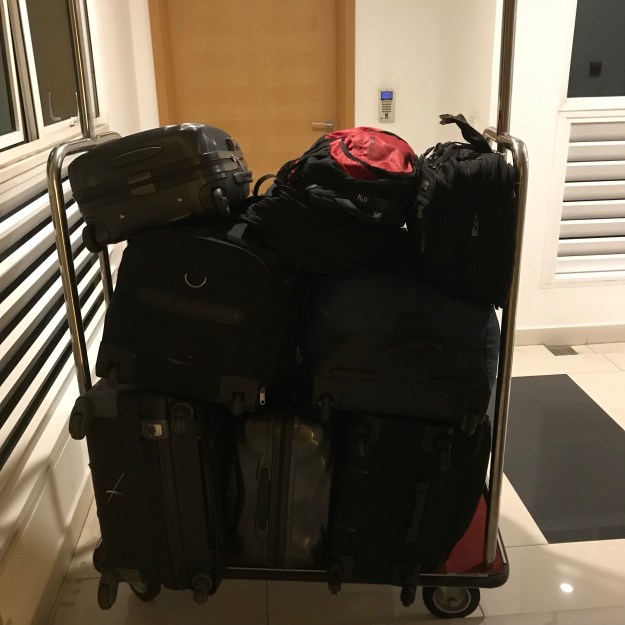
Ok, I’ll admit it. This is a LOT of luggage. (In our own defence, it was what we brought home after two years in Asia). But still…Seeing, not to mention transporting, this amount of stuff did make me think. How in future could we travel a bit, well, lighter. A recent article* provided food for thought..
One suggestion was to follow the advice of Jerome K Jerome’s narrator in his classic book Three men in a Boat: “It is lumber, man- all lumber! Throw it overboard”. Hm, I admire the principle, just I’m not sure it would work for me. Lumber? All of it? My book, my diary, phone? Even my sun hat? A scarf? An extra pair (or two) of shoes? Splish splosh never to be seen again? No, don’t think that’s for me,
Maybe a better strategy is to think about what to take, rather than what not to take. So the advice novelist Louisa Young received from her sister would Be helpful. This intrepid lady, who went round the world on a motorbike and presumably knows a thing or two about packing, recommends taking “one silk dress – rolls up tiny, in case an Ambassador invites you for tea”. There’s that idea about making things you pack work for their keep, too – international educationalist Thom Jones always takes a harmonica, and uses it to judge the countries he goes to by whether their customs staff demand that he plays it…
But the best advice of all, I think, was given to writer Horatio Clare in the Kaokoveld Desert. Clare asked: “What should I take?” His Namibian guide replied: “Go with a level head and a humble heart. You’ll be fine”. You know, I think that’s one to try. It might even work if (when?) that Ambassador invites us for tea…
* Horatio Clare’s article on packing, The Observer magazine, 29 July 2018
India has recently joined Nepal, Bangladesh, Pakistan and Germany in recognising, for official purposes, a third gender.
And so, apparently, does Google. A friend recently set up a gmail account and had to specify whether she was ‘male’, ‘female’ or ‘other’.
Many countries around the world have laws to protect animal wellbeing, sometimes framed in general terms, sometimes more specific. For example: in Australia it’s illegal to give kangaroos more than 6 bottles of beer, in Florida you can go to jail for loading livestock onto school buses (and/or having sex with a porcupine. Er, no comment). In Britain, the Loch Ness monster is a protected species. In parts of the US it’s forbidden to catch fish with a machine gun (or by lasso, or by giving them alcohol, interestingly). And although you can hunt bears legally in Alaska, it’s against the law to wake them up for a photo. In the Philippines cremations are only allowed if there is no live creature in the deceased’s pockets*.
All well and good, but I prefer the “do as you would be done by” approach to animals that we saw in Tamil Nadu, India.
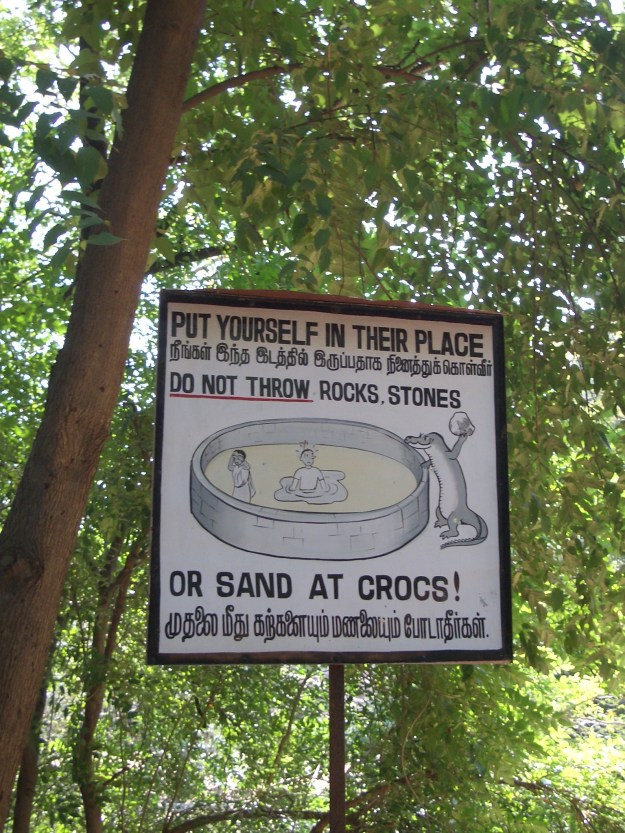
*These wonderful examples are courtesy of writer Alwyn Sambrook
 travelling frogs