Category Archives: Humour around the world

Pigs, and other animals, might fly…

I heard recently that John Steinbeck was told by his professor that he would be an author ‘when pigs flew’.  And that when his novels were printed, Steinbeck inscribed them with ‘ad astra per alas porci’ (‘to the stars on the wings of a pig’) – brilliant!

It’s such a great image, isn’t it? Apparently ‘flying pigs’ have been used to express the idea that something is impossible since the 1600s*.  Of course pigs don’t fly everywhere. In Finland you should look out for flying cows, as in the wonderful phrase ‘kun lehmät lentävät’. And in Greece you might see a donkey up in the air. If you don’t believe me, here’s the evidence ….

fullsizeoutput_1259*Come to think of it, at that time any suggestion that human beings might one day fly to the ends of the earth would probably also be met with the sarcastic response ‘yeah, when pigs fly… But that’s another story.

Pancake Tuesday

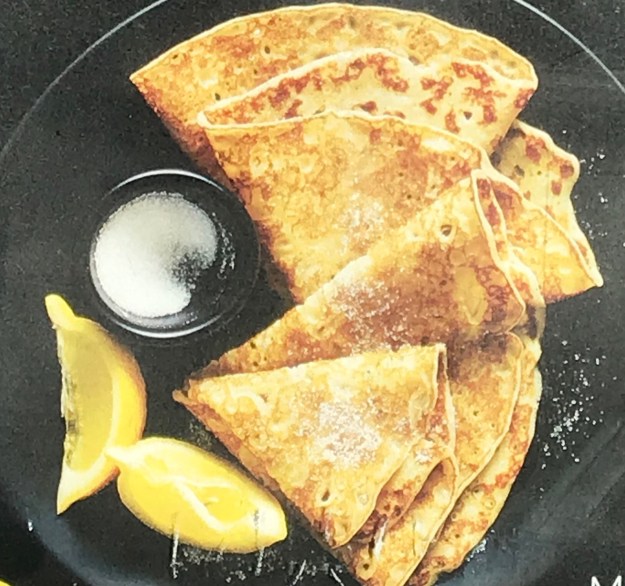
5 March is the date of Shrove Tuesday this year. The fasting season of Lent starts the following day, so traditionally this was the day when milk, sugar, eggs and the like were used up to clear the way for 40 days of more abstemious fare. And what can you make with milk, sugar and eggs? Pancakes, of course!

And it’s not a uniquely British tradition, Pancake Day is marked in countries from the US to Ukraine and Russia.

Indeed, Travelling Frogs saw a range of options on a Moscow restaurant menu:

My mummy’s pancakes (with butter)

My mother in law’s pancakes (with sour cream)

My wife’s pancakes (with honey)

Two for the Price of One

paws for a moment_48d5

(Seen on a high street in Oxford, England)

Two stereotypes, that is.

Now, there have been books and papers and articles on the subject of stereotypes, how prevalent they are, how dangerous they may be, etc, etc. So maybe a better term, suggested by anthropologist Kate Fox, is “defining characteristics”. In her wonderful book “Watching the English” she writes about humour, which, she says, is the English “default mode”. We can’t even switch it off (and for the benefit of my non-English friends – I’ve tried, honest I have).

She writes about pets, too: “it is often said that we treat them like people, but this is not true. Have you seen how we treat people? It would be unthinkable to be so cold and unfriendly to an animal”. (By the way, just in case you’re wondering, she does go on to say that she is exaggerating – a bit. Now is that her English humour, or…?)

Postscript: (For information – after a mild winter so far, it has today turned icy). After finishing this post, your intrepid Travelling Frog, wrapped up in scarf and hat and warm coat, ventured out to the shops. And heard the following conversation:

Customer: “It’s so cold today”

Assistant: “Yes, isn’t it.  There’s a calculated vindictiveness about the English weather”

Customer: “There is. Perhaps we should talk about something else”

Assistant: “But we’re English! That’s what we do. We talk about the weather”

Stereotype number three?!

* an entertaining read as well as hugely informative

A Norwegian Joke

They say that laughter is the best medicine.  And it seems to be pretty universal. Here’s a Norwegian joke.

A Norwegian lorry driver was on his way to Bergen, transporting penguins to the aquarium there. Unfortunately his lorry broke down on a mountain pass.  As he stood by the road, wondering what to do, another lorry pulled up, and the Swedish driver got out and asked if he could help. The Norwegian explained his predicament, and the Swede offered to help, loaded the penguins into his truck, and drove off.

Next day, lorry fixed, the Norwegian reached Bergen. As he stopped at a traffic light, he saw his Swedish saviour from the day before, waiting to cross, with the penguins in a row behind him. “What on earth are you doing?” he asked “You were supposed to be taking them to the aquarium!”. “Oh yes” replied the Swede. “That was yesterday. Today I’m taking them to the movies.”

Footnote

Quite a lot of humour appears to be at the expense of other nationalities. The English tell Irish jokes, for example, the French- Belgian jokes. Indian jokes are often about Sikhs, Polish jokes about Russians, Brazilian jokes about Portuguese… You get the idea. Hmmm. There’s a whole question there about who it’s OK to laugh at, if anyone.

Footnote to the Footnote

Blonde jokes are told by everyone


A Russian Joke

UNADJUSTEDNONRAW_thumb_af

Russian humour, in our experience, often has a subtext. For example this joke, which we heard in Moscow:

Question

What is the difference between a Russian pessimist and a Russian optimist?

Answer

The pessimist says “Oh, the situation is awful. It’s terrible. It couldn’t possibly get any worse”.

Our optimist replies, enthusiastically – “Yes it could, yes it could…”