Monthly Archives: October 2018

To Trust, or Not to Trust?

Beach

On a bus in Sarawak, Travelling Frogs overheard a conversation. A young German couple, recently arrived from Thailand, were chatting with an American couple who were on their way there and who were eager for recommendations.

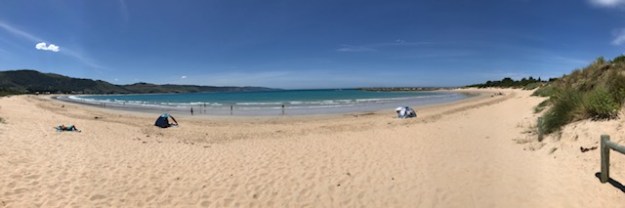
The Germans told the following tale, of visiting a beach that was highly praised in their guide book.  Yes, they said, it was very beautiful, palm-fringed, sable-sanded, wonderful views over the azure sea. Worth going there? Yes, definitely. It was stunning. It was also very busy*.  Anyway, they staked their claim to a pretty spot and settled down to enjoy the day. As they relaxed with their books and their sunscreen. a local gentleman came over to them. After exchanging greetings, where everyone came from, etc, the German couple said how much they loved the country and how special this place was. The Thai gentleman seemed pleased with the compliments, and pointed to the far end of the beach. ‘Over there’, he said ‘see, there’s a little gap in the trees. Go over there, through the gap, five minutes walk, you’ll come to another beach. Beautiful like this, no people. Quiet, tranquil. Go there, you’ll like it’.

At this point, relating the story to their new friends on the bus, our young German couple admitted they were nervous, not sure what to do. They didn’t know this person. He seemed very charming and very friendly. He obviously knew the area. It was so kind of him to suggest this hidden treasure. But…doubts set in. Was there a beach? If so what was it like? Was it really deserted? They didn’t know this person, who was he? How could they judge his intentions? Was there some ulterior motive? Was he trying to con them, sell them something, worse? Would they be safe? They decided to stay where they were. The American couple nodded. ‘Very wise’, they said. ‘Good decision. You never know’, they said.

The story didn’t quite finish there, though. The Germans’ hours on the beach were delightful, if not quite idyllic. At the end of the day, they gathered their belongings, and thought ‘what if?’ And, on impulse, walked to the end of the beach, through the gap in the trees, followed the narrow, rather overgrown path for five minutes, and stepped out – onto a beautiful, deserted, beach.

Ahhh. Travellers’ dilemmas, indeed.

*That’s a bit of a problem with guide books, in my experience.  Other people read them too…
Do you speak Manglish?

I don’t speak Malaysian English, known as Manglish, very fluently, but I have learned some useful words.

So here’s my mini Manglish dictionary:

Tingwat? What do you think?

Yusobadwan (Literally: ‘you’re such a bad one’). That’s not very nice

Izzit? Expression of mild disbelief

Blur Confused, out of it

Noob Useless, lousy or incompetent thing or person

My favourite of all, though, maybe because it seems to sum up a universal sentiment, is:

Debladigarmen The bloody government

Rhyme and Reason

Today is National Poetry Day in the United Kingdom – a celebration of the power of verse to bring people together. Thousands of events have been planned, in schools, bookshops, libraries, on trains and buses and in hospitals.

Why poetry? Well, poet Dan Celotti sums it up; poetry “offers no answers, no advice, no cures, just understanding and love and timing. Read poetry because the world is more than the facts of the world”.

And if you’re looking for an illustration of what he means, read Imtiaz Dharker’s extraordinary poem:

Front Door

Wherever I have lived, walking out of the front door every morning
means crossing over
to a foreign country.

One language inside the house, another out.
The food and clothes
and customs change.

The fingers on my hand turn into forks.

I call it adaptation
when my tongue switches
from one grammar to another, but the truth is I’m addicted now, high on the rush
of daily displacement,
speeding to a different time zone, heading into altered weather, landing as another person.

Don’t think I haven’t noticed you’re on the same trip too.


Reproduced on the website https://nationalpoetryday.co.uk, with kind permission of the author and Bloodaxe Books.

A Russian Joke

UNADJUSTEDNONRAW_thumb_af

Russian humour, in our experience, often has a subtext. For example this joke, which we heard in Moscow:

Question

What is the difference between a Russian pessimist and a Russian optimist?

Answer

The pessimist says “Oh, the situation is awful. It’s terrible. It couldn’t possibly get any worse”.

Our optimist replies, enthusiastically – “Yes it could, yes it could…”

And the Crocodile…

Many settlements in Sarawak are strung out along the rivers, and even today are reached not by road, but by boat.

Take for example a fishing village we saw whilst on a river trip. The home of 700 souls, it now, we were told, has electricity. No running water yet; some pipes were installed after the last election, the villagers are hoping they might get water after the next. It has a kindergarten, and a primary school.

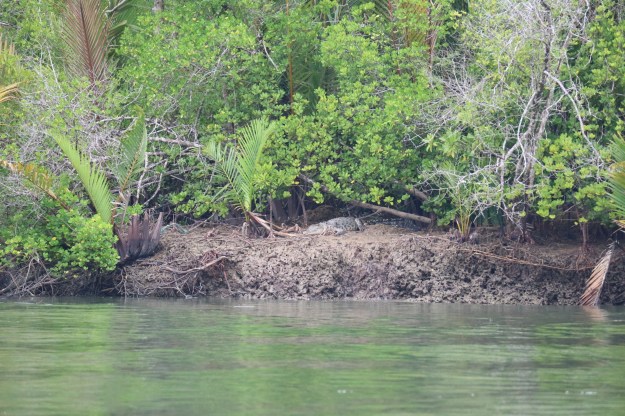
Oh, and it has a sports pitch. In the dry season it’s used for football. And in the wet season when the river floods?  As the driver of our boat told us, it’s used for water polo: “…and the crocodile defends the goal”.

How Does the Tourist Cross the Road?

6 Million Motorbikes

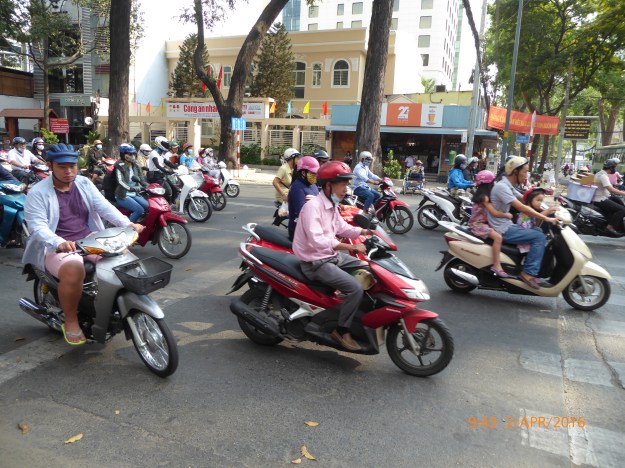
Ho Chi Minh City has10 million people. And 6 million motor bikes. And when you want to cross the road, they all seem to be heading towards you…

Imagine. You’ve been sightseeing, you’ve loved it but now you’re footsore and weary. You can see one of those chic, charming cafes, all French style and Vietnamese charm, cold drinks, warm welcome. But…it’s on the other side of the road.

And on the road, there are motorbikes.  Lots and lots of them. Everywhere in Vietnam the motor cycle is the workhorse of transport. You’ve spotted one loaded with a ladder, loops of wires and a box of tools, another with a wardrobe, others with seemingly impossible quantities of flowers, of plastic boxes, of brooms and baskets, of those mouth watering baguettes.  You’ve seen a little girl in school uniform, satchel on her back, wedged between Dad and big brother. You’ve seen three giggling students, a mother and daughter in matching pink helmets, two men in black martial arts gear. You’ve seen songbirds in cages, loaded onto the handlebars to be taken to the park for singing practice. You’ve heard an overawed foreigner report: ‘I saw a bike with a family of 5 on it yesterday’.  You’ve been invited -‘you motobike you’ – to take a ride on a ‘xe om’ (literal translation is ‘hug vehicle’).

So, there are lots of motorbikes. But, you might ask, what’s the problem? After all, the city boasts wide streets, plenty of traffic lights, strategically placed zebra crossings. Well, it appears that lights and crossings and traffic signs are often, er, how shall we put this, guidelines, rather than obligatory. And here you are on the roadside. With a torrent of traffic between you and that cafe. Cars, taxis, a few trucks, a tourist minibus. And all those motorbikes, sailing through red lights or down one-way streets the wrong way, darting (illegally) to right or left… You laughed when you heard about foreign tourists standing at the side of the road for an hour waiting to cross, then giving up or booking a taxi to drive them to the other side of the street. Suddenly it doesn’t seem so funny.

But…that café. That cold drink. And you’re at a crossing, surely that must mean something? And just now there’s a break in cars and trucks and buses and look, there’s a local stepping out into the fray… What did they tell you? ‘Let cars and buses go first. Take it slow and steady. Whatever you do, don’t change direction. And don’t stop. Whatever you do don’t stop. They aren’t deliberately targeting you’.

So  – off you go. Deep breath, launch into the free-for-all, into the stream, steady now, hold your nerve. Eyes on the traffic, slowly now, don’t flinch…and yes! the flow of motor bikes parts for you, closes behind you. And then- then there you are! On the pavement in front of the cafe, triumphant, heart beating faster but unharmed. Ready for that drink…